As we continue our college series, we re-discover that graduation rates are important on influencing the cost of college. Published on: September 7th, 2024
National 6-year graduation rates
The National Center for Education Statistics (NCES) calculated how many people graduated in 6 years after attending a 4 year public, private non-profit, and private for-profit college. The average for all institutions was 64% in 2022 for the 2014 cohort. Which means 36% took longer than 6 years or didn’t get their degree.
Breaking down the numbers:
- 64% graduated in 6 years across all institutions
- 60% of males graduated in 6 years across all institutions
- 67% of females graduated in 6 years across all institutions
- 63% graduated in 6 years across public institutions
- 60% of males graduated in 6 years across public institutions
- 66% of females graduated in 6 years across all institutions
- 68% graduated in 6 years across private nonprofit institutions
- 64% of males graduated in 6 years across private nonprofit institutions
- 71% of females graduated in 6 years across private nonprofit institutions
- Private for-profit graduation rates were dismal 29%, 31%, and 28% respectively for total, males, and females
Your best chance of graduating is being born a women and going to a private nonprofit school.

The cost of low graduation rates
It baffles me why US graduation rates for college are so low. It’s not like the idea of college is new. They’ve had centuries to figure it out and help people graduate. Think of buying a house. If only 64% of houses were built on time, and 36% ran into schedule overruns, every year, the population would be furious and demand reforms. Why don’t we have anger on low graduation rates?
Two examples
Noah
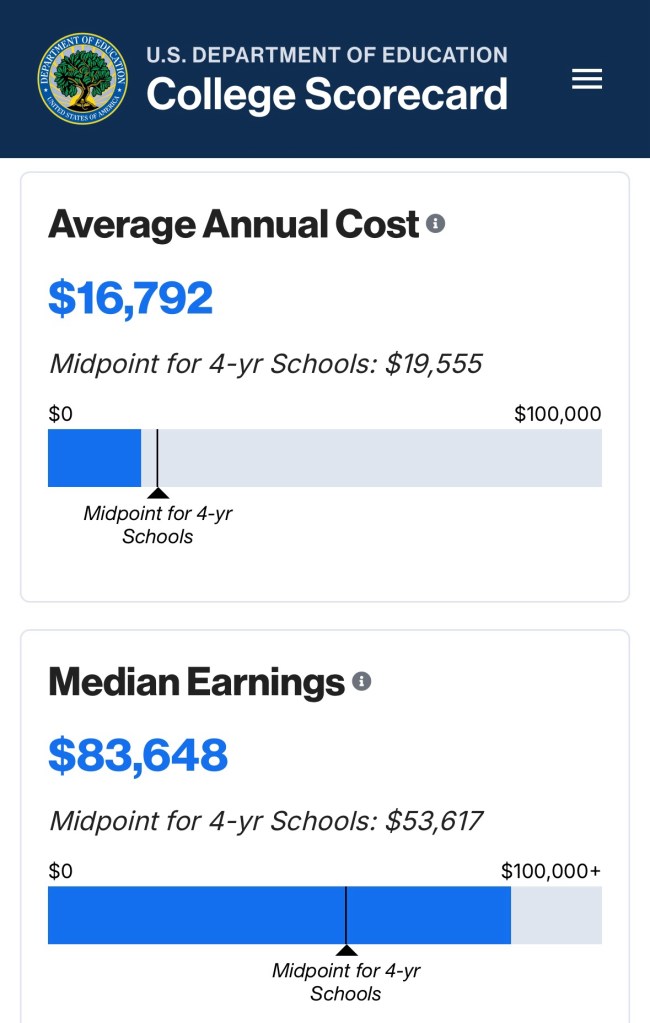
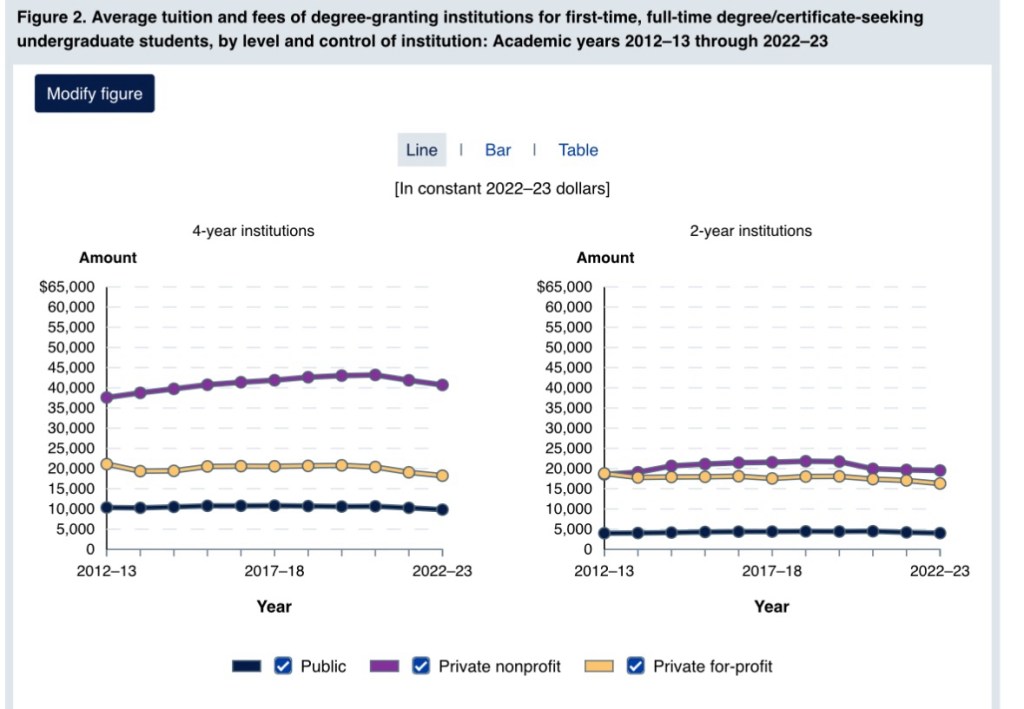
Our first example is Noah. Noah started a college degree at a 4 year public university. The average cost of a public university is $10,000 a year (2).
If Noah graduated in 4 years he will pay $40,000. If Noah took 8 years he will pay $80,000. To keep it simple, Noah can only graduate in 4 years or 8 years. Noah has a 64% chance to graduate in 4 years. What is Noah’s expected cost of college over 8 years?
4 year cost times 4 year graduation rate =
$40,000 x 64% =
$25,600
8 year cost times 8 year graduation rate =
$80,000 x 36% =
$28,800
Adding both together gives Noah an expected cost over 8 years of $54,400.
Olivia
Our second example is Olivia. Olivia has enrolled in a 4 year degree at a private nonprofit college. Her private nonprofit college cost per year is $40,000 (2). What is Olivia’s expected cost of college over 8 years, if she can only graduate in four or eight years and the four year graduation rate is 71%?
4 year cost times 4 year graduation rate =
$160,000 ($40,000 x 4 years) x 71% from above =
$113,600
8 year cost times 8 year graduation rate =
$320,000 x 29% remaining =
$92,800
Adding both together, Olivia can expect to pay $206,400 to obtain her degree.
The NCES created College Navigator (3), which uses statistics collected by the Department of Education to share details about a college. Here is the graduation rate summary for University of Michigan-Ann Arbor. Another great site is the NCES College Affordability and Transparency Center, shown as our featured image (4).
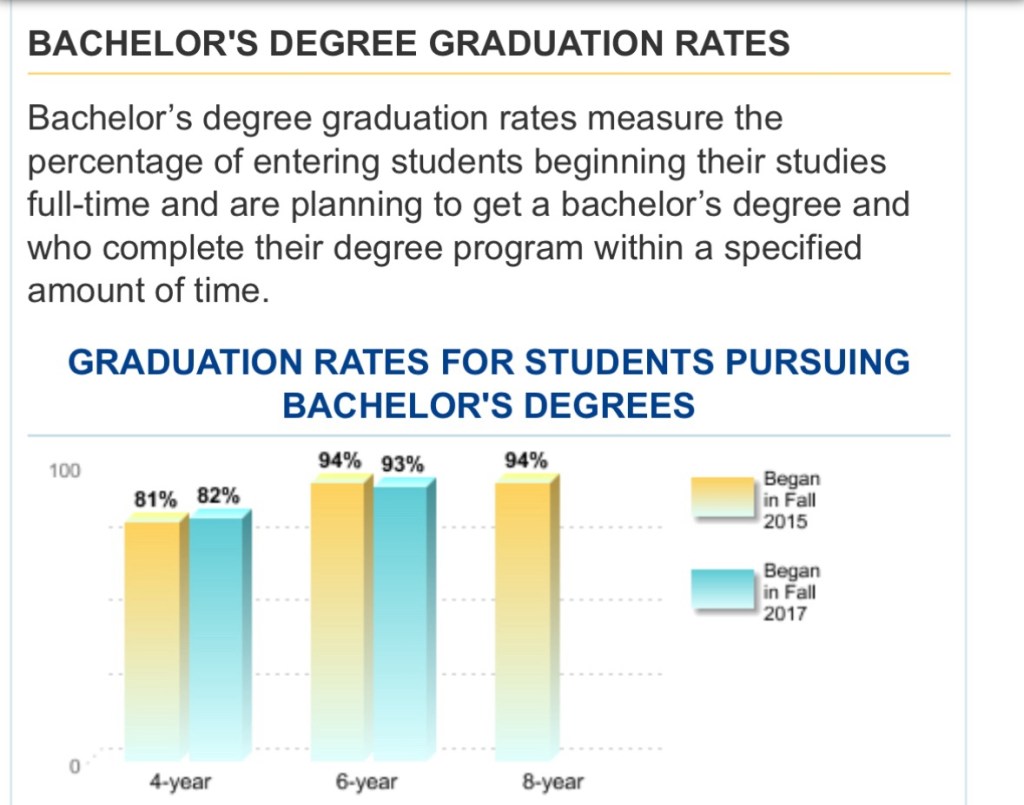
Graduation rates are important when you conduct your college search. The higher the graduation rate of graduating in 4 years the less you can expect to pay. College is Big Business. They are experts at negotiating. Negotiate from a position of strength.
Sincerely yours,
smilingdad
Copyright ©2017-2024 smilingdad. Copyright ©2023-2024 PokeAshVMax. All Rights Reserved. The content produced by this site is for entertainment purposes only. Opinions and comments published on this site may not be sanctioned by and do not necessarily represent the views of smilingdad, its owners, sponsors, affiliates, or subsidiaries.
(1) nces.ed.gov. “Undergraduate Retention and Graduation Rates, https://nces.ed.gov/programs/coe/pdf/2022/ctr_508.pdf.”
(2) nces.ed.gov. “Tuition costs of colleges and universities, https://nces.ed.gov/fastfacts/display.asp?id=76.”
(3) nces.ed.gov. “College Navigator, https://nces.ed.gov/collegenavigator/.”
 smilingdad